
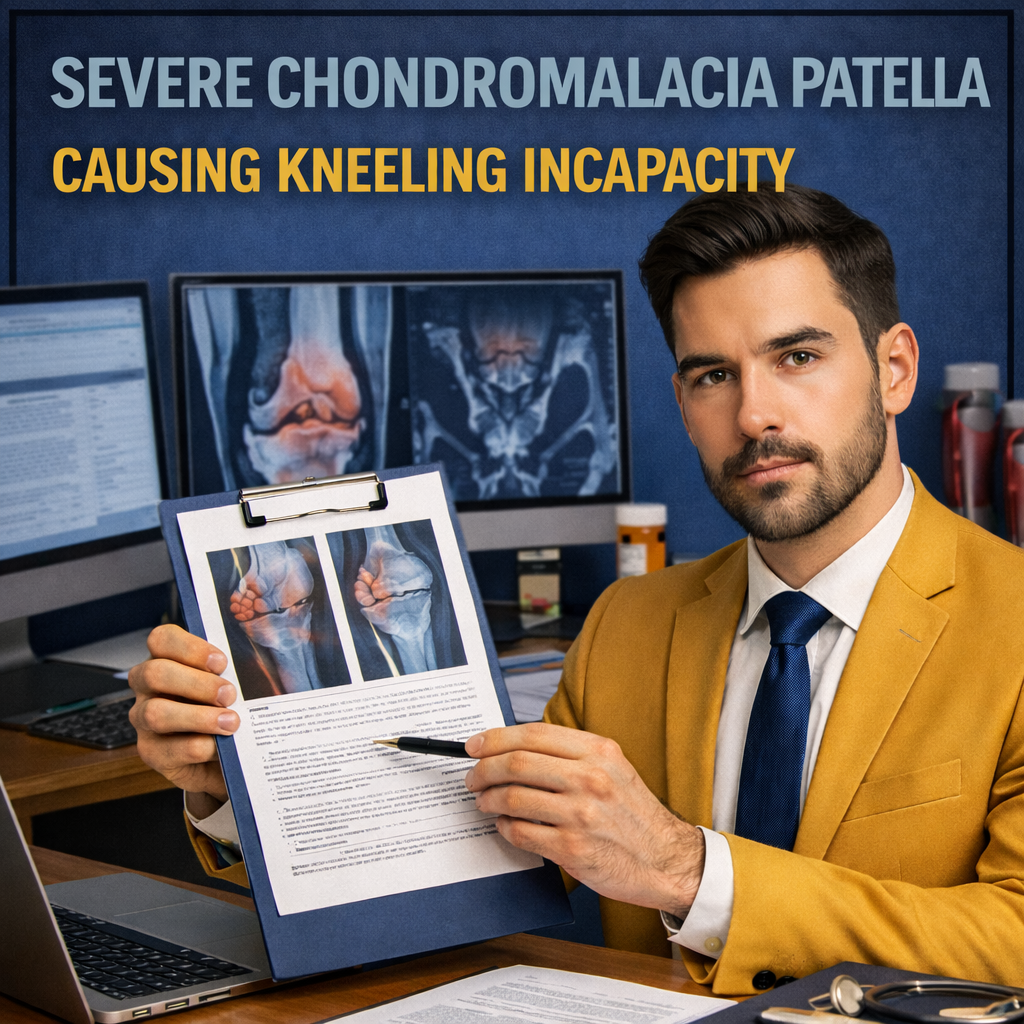
Severe chondromalacia patella causing kneeling incapacity
When kneeling becomes impossible, disability outcomes often depend on consistent exams, imaging, and work-duty documentation.
Severe chondromalacia patella can turn a basic movement—kneeling—into a trigger for sharp pain, swelling, and instability. That limitation may sound narrow, but for many jobs it affects core duties like floor-level work, stocking, cleaning, caregiving tasks, trades, and emergency response activities.
In disability and medical-legal claims, the real challenge is not naming the diagnosis. The challenge is proving functional impact over time, linking symptoms to objective findings and treatment history, and showing why modified duties are not realistic or sustainable in the actual work setting.
- Denials often cite “insufficient functional proof” despite a clear diagnosis.
- Gaps in treatment and inconsistent restrictions can weaken credibility.
- Job duties may be misclassified if kneeling demands are not documented.
- Stronger outcomes usually follow consistent exams, imaging, and work-duty records.
Quick guide to severe chondromalacia patella with inability to kneel
- What it is: cartilage damage under the kneecap causing pain with kneeling, stairs, squatting, or prolonged sitting.
- When issues arise: work duties require floor-level tasks, frequent bending, climbing, or repeated kneel-to-stand movements.
- Main legal area: disability benefits (SSDI/SSI), private disability insurance, and sometimes workers’ compensation.
- Downside of ignoring it: worsening symptoms, failed return-to-work attempts, and denials based on “limited documentation.”
- Basic path forward: build medical proof + functional proof, file a claim, then appeal with targeted evidence if denied.
Understanding severe chondromalacia patella in practice
Chondromalacia patella describes degeneration or softening of cartilage behind the patella. When severe, it can cause persistent anterior knee pain, crepitus, swelling, and episodes of giving way—especially during kneeling, squatting, stairs, or rising from the floor.
In benefit evaluations, the key is translating symptoms into measurable limitations. A documented inability to kneel can matter as much as walking limits, depending on the occupation and whether the person can perform required postures safely and repeatedly.
- Provoking activities: kneeling, crawling, squatting, stair climbing, prolonged sitting with bent knee.
- Common functional limits: reduced tolerance for floor-level work, difficulty with transfers, and slower pace with bending tasks.
- Objective anchors: imaging, exam findings, and consistent treatment notes over time.
- Work translation: inability to meet essential postural demands for the real job, not an idealized job.
- Consistency across visits (pain triggers, swelling, instability) often weighs heavily.
- Imaging plus exam findings support severity when notes align over months.
- Specific restrictions (no kneeling/crawling, limited stairs) beat vague “knee pain” statements.
- Work-duty documentation can be decisive when posture demands are central to the job.
- Failed modified duty attempts should be documented with dates and symptoms.
Legal and practical aspects of the condition
Most disability systems focus on function, not labels. For SSDI/SSI, the evaluation commonly turns on residual functional capacity (RFC): what activities can be sustained in a full-time setting, including postural limits such as kneeling, crouching, and crawling.
Private disability policies may use “own occupation” or “any occupation” definitions, and they often analyze whether kneeling limits prevent the material duties of the insured’s occupation. Claims may also involve independent medical exams and requests for updated imaging.
Evidence is usually weighed based on:
- Objective findings: MRI/X-ray reports, exam findings like patellofemoral crepitus, pain with compression, and range-of-motion limits.
- Treatment history: physical therapy notes, injections, bracing, medication trials, and specialist follow-ups.
- Functional documentation: work restrictions, functional capacity evaluation (FCE), and consistent activity tolerance records.
- Work demands: job descriptions, employer duty statements, and observed postural requirements.
- Symptom consistency: similar reports across providers and over time, not just at one visit.
Important differences and possible paths in the claim
Severe chondromalacia patella cases can look very different depending on whether the work is primarily standing/walking, frequent kneeling/crawling, or mixed-duty physical labor. The inability to kneel may be minor in some desk roles, but critical in trades, caregiving, maintenance, and warehouse work.
- Disability system type: SSDI/SSI (functional capacity and vocational rules) versus private disability (policy language and occupation definitions).
- Scope of impairment: isolated knee limitations versus combined issues (back pain, hip problems, obesity, depression/anxiety from chronic pain).
- Durability: short-term flare-ups versus sustained inability to kneel despite treatment and time.
Possible paths often include a negotiated resolution with an insurer, a contested administrative process (appeals, hearings), or a lawsuit challenging a denial under the policy framework. Each route benefits from focused, consistent documentation and careful handling of statements, forms, and activity descriptions.
Practical application of the condition in real cases
This problem commonly appears in jobs that require getting down to floor level, kneeling to access low shelves, installing or repairing equipment, cleaning baseboards, assisting patients, or performing inspections. Even if walking is possible, the inability to kneel can eliminate essential job tasks.
People most affected are often workers in construction, maintenance, healthcare support, warehouse logistics, delivery roles with frequent loading, and service jobs that require repeated bending or kneel-to-stand transitions.
Further reading:
Useful documents often include imaging reports, orthopedic and physical therapy notes, work restriction letters, incident or duty-change records, and employer job duty descriptions. When available, an FCE can translate symptoms into measurable work limits.
- Gather records: imaging, treatment notes, medication history, PT progress notes, and any prior knee surgery or injury documentation.
- Ask for specific restrictions: written limits on kneeling, crouching, crawling, stairs, lifting, and time-on-feet, with duration noted.
- Document job demands: obtain a duty statement showing frequency of kneeling/crawling and the consequences of not performing those tasks.
- File the claim carefully: describe limitations in functional terms (tolerance, frequency, recovery time), not only pain descriptors.
- Track deadlines and appeals: respond to requests for exams or records, and appeal promptly with targeted evidence if denied.
Technical details and relevant updates
For SSDI/SSI, musculoskeletal claims are often assessed through medical evidence plus RFC, rather than a single diagnosis automatically qualifying. Knee conditions may be evaluated under broader rules for major joint abnormalities and functional limitations, especially when there are documented postural limits and consistent treatment records.
For private disability, policy language matters. “Own occupation” claims typically focus on whether kneeling limits prevent essential job tasks, while “any occupation” reviews may analyze whether the person can transition to roles that avoid kneeling and excessive bending.
- Attention point: insurers may request updated imaging or an independent medical exam to challenge severity.
- Attention point: treatment gaps can be interpreted as improvement unless explained and documented.
- Attention point: forms should match medical notes, especially on kneeling/crouching frequency and tolerance.
- Attention point: workplace accommodations should be recorded, including failed attempts and symptom flare patterns.
Practical examples of the condition
Example 1 (more detailed): A maintenance technician develops worsening anterior knee pain and can no longer kneel to service low equipment panels. MRI shows advanced patellofemoral cartilage loss, and physical therapy notes document pain with patellar compression, swelling after kneeling attempts, and inability to tolerate kneel-to-stand transitions. The initial disability claim is denied because the person can still walk and drive.
On appeal, the file is strengthened with a detailed duty statement confirming frequent kneeling and crawling, a treating provider restriction letter stating “no kneeling/crawling” with duration and rationale, and therapy progress notes showing failed graded kneeling trials. The claim is reconsidered with clearer proof that essential duties cannot be performed reliably in a full-time work setting, even if basic ambulation remains possible.
Example 2 (shorter): A home health aide reports severe pain when kneeling to assist with transfers and cleaning tasks. Notes show repeated flare-ups after short kneeling attempts, and the provider documents limits on crouching/kneeling and stair climbing. The claim strategy focuses on consistent treatment records, objective exam findings, and an accurate description of the job’s floor-level demands.
Common mistakes in the claim
- Relying on the diagnosis name without documenting specific functional limits (kneeling, crouching, crawling, stairs).
- Submitting vague provider notes that do not include duration, frequency, or work-duty restrictions.
- Leaving gaps in treatment without documenting barriers or ongoing symptoms.
- Using inconsistent activity descriptions across forms, visits, and employer statements.
- Missing appeal deadlines or failing to respond to requests for exams and records.
- Assuming walking ability automatically defeats a claim, without tying kneeling limits to essential job tasks.
FAQ about severe chondromalacia patella with inability to kneel
Does inability to kneel matter if walking is still possible?
Yes, it can matter a great deal when kneeling, crouching, or floor-level tasks are essential to the occupation. Decision-makers often focus on whether duties can be performed reliably, repeatedly, and safely over a normal work schedule. The best support comes from consistent restrictions and clear job-duty documentation.
Is an MRI required to prove severity?
An MRI is often helpful because it can document cartilage loss and related findings, but the strongest cases also include repeated exams, therapy notes, and functional documentation. Claims usually improve when imaging aligns with ongoing clinical findings and well-documented work limitations.
What should be added after a denial based on “insufficient proof”?
Targeted additions often include a detailed duty statement, specific provider restrictions on kneeling/crouching/crawling, and longitudinal notes showing persistent limitations despite treatment. If available, an FCE or work-capacity assessment can translate symptoms into measurable limits that reviewers can apply to job demands.
Legal basis and case law
In U.S. disability systems, the legal framework generally requires proof of a medically determinable impairment and evidence of resulting functional limitations over time. For SSDI/SSI, federal regulations and Social Security rulings emphasize evaluating symptoms alongside objective medical evidence, treatment history, and consistency in the record, culminating in an RFC assessment.
Private disability claims are governed by the policy language, including definitions of disability, occupation standards, elimination periods, and proof requirements. Many disputes involve whether the medical evidence supports the stated restrictions and whether the occupation’s material duties truly require kneeling or similar postures at a frequency that cannot be sustained.
Courts reviewing disability decisions often focus on whether decision-makers reasonably considered consistent treatment notes, objective findings, and well-supported medical opinions. Outcomes tend to turn on the quality of documentation, internal consistency of the record, and whether the final decision addresses the most important functional evidence.
Final considerations
Severe chondromalacia patella with inability to kneel can have outsized consequences in physically demanding occupations. The strongest claims usually show a clear timeline: persistent symptoms, consistent exams, appropriate treatment, and specific functional limits that map directly to essential job duties.
Careful documentation—imaging, therapy notes, work restrictions, and accurate job-duty records—often determines whether the case is understood as a true work-capacity problem rather than a general complaint of knee pain. When a denial happens, targeted additions that clarify function and duty demands are usually more effective than repeating the diagnosis.
This content is for informational purposes only and does not replace individualized analysis of the specific case by an attorney or qualified professional.